Why a kempinski nay pyi taw hotel review makes little sense
Nay Pyi Taw is a city built for protocol rather than for wandering. The wide roads, the distance between districts and the silence after dark reshape how any luxury hotel feels in this part of Myanmar. A conventional kempinski nay pyi taw hotel review struggles because the destination itself refuses normal city logic and behaves more like an administrative campus than a lived‑in capital.
The former Kempinski hotel rose beside the Myanmar International Convention Center, designed as a star hotel for presidents, ministers and executives shuttled between meetings. Here, the word “hotel” means a secure enclave more than a social hub, and the surrounding Nay Pyi Taw landscape of ministries and manicured lawns reinforces that. When travelers search for high‑end accommodation in the capital of Myanmar, they are often surprised by how far each address sits from the next café, pagoda or market.
Luxury in this city is measured in time and space rather than in nightlife. A guest might spend more time in an airport shuttle than in any street teashop, yet still feel the stay is good because the transition from airport to room is seamless. For business and leisure travelers, the real kempinski nay pyi taw hotel review question becomes simple: does the property turn an official trip into a complete trip, or does it remain just another government hotel with polished amenities and little soul?
The gold leaf ceiling and the strange theatre of excess
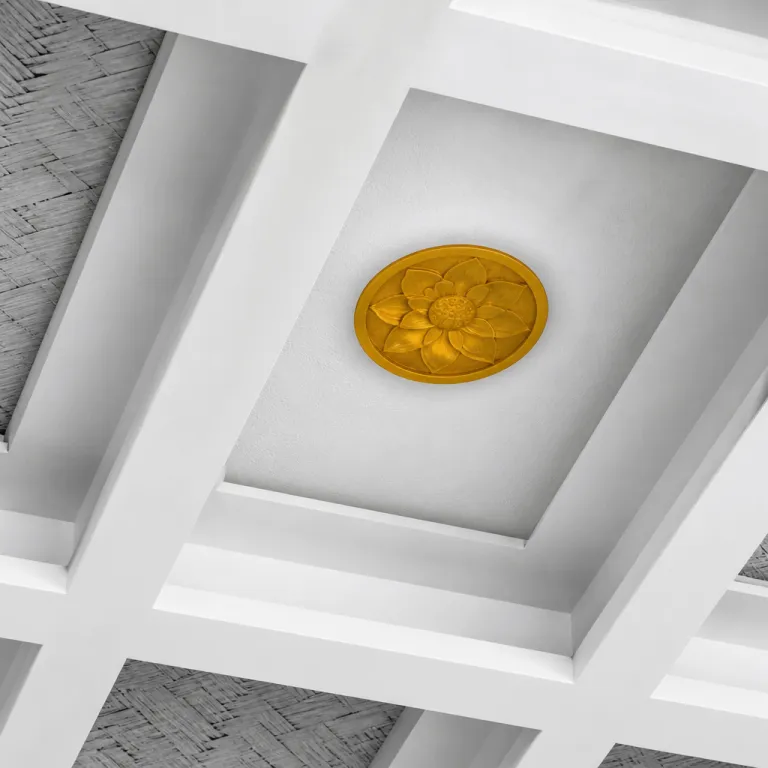
Walk into the former Kempinski lobby and the first thing you notice is the ceiling. Sheets of gold leaf shimmer above the marble, widely described as one of the most expensive decorative installations in any hotel in Myanmar. In a more crowded city this would feel like theatre; in Nay Pyi Taw, it feels like a private performance staged for a handful of guests.
The property opened with around 141 rooms and suites, including a Grand Royal Suite reported to be close to 1,000 square meters in size, a scale that still anchors every serious kempinski nay pyi taw hotel review. This was not just a Kempinski‑branded address but a statement by its owners, Kanbawza Group and Jewellery Lucky Company, who were said in local business coverage to have invested roughly 90 million USD to create a flagship star hotel near the convention center. For travelers used to compact city hotels, the sheer volume of space per room can feel almost surreal, especially when the corridors are quiet and the front desk team has more staff than check‑ins.
Such excess only makes sense when you remember who came here. During the 2014 ASEAN Summit, international media and official schedules noted that dignitaries including then‑President Barack Obama stayed under that golden ceiling, and the Kempinski management positioned the property as the natural choice for heads of state. For an executive arriving from Yangon or Mandalay, the experience was less about local street life and more about controlled movement between suite, meeting room and airport shuttle, with every amenity calibrated to keep the outside world at a respectful distance.
“Why did Kempinski Nay Pyi Taw close?”, “What made the hotel unique?” and “Who stayed at the hotel?” are questions that still surface in detailed reviews of luxury hotels in Myanmar’s capital. The most widely shared answers are simple and stark: Kempinski’s management reportedly ceased operations in 2021 due to operational challenges; the property stood out for its opulent gold leaf ceiling and vast Grand Royal Suite; and high‑profile guests, including President Obama during the ASEAN Summit, once checked in there. For travelers reading any kempinski nay pyi taw hotel review today, those points frame the property as both a high point of Myanmar’s luxury ambitions and a reminder of how fragile such grand projects can be.
Living large in an almost empty capital
To understand this hotel, you first need to understand the city that surrounds it. Nay Pyi Taw is a planned capital laid out in vast sectors, where a drive between ministries can take longer than a cross‑town journey in Yangon. That scale shapes every stay, every shuttle ride, every impression of luxury.
Most guests arrive via domestic flights from Yangon or Mandalay, stepping from a modest airport into a waiting airport shuttle arranged by their chosen provider. In the Kempinski era, the airport transfer felt like a soft handover from public Myanmar to private Myanmar, with chilled towels, bottled water and a quiet briefing on check‑in time and meeting schedules. For executives extending a work trip, this was the moment when a functional visit began to look like the start of a complete trip, even if the city outside the window remained elusive.
Once checked in, the rhythm of the stay revolved around controlled movement. The front desk handled express check‑in formalities, arranged currency exchange at an on‑site exchange counter and coordinated room service for late‑night calls with other time zones. Guests who wanted to explore could ask about nearby pagodas, the national zoo or the gem museum, but many simply stayed within the grounds, treating the hotel as a self‑contained retreat, even though there was no golden lake shimmering at the edge of the property.
For travelers comparing options across the country, it helps to read a broader guide to the best hotels in Myanmar that looks beyond the star rating and into context, such as the analysis on what the phrase “best hotels in Myanmar” really means past the star rating. Against that backdrop, any honest kempinski nay pyi taw hotel review must admit that this property was never competing with a lakeside resort in Inle or a golden‑lake‑facing retreat in Kayah. It was competing with the demands of protocol, the emptiness of 20‑lane roads and the need for a sanctuary where high‑level guests could work, rest and leave without friction.
Inside the bubble: rooms, amenities and the quiet luxury of control
Step into a standard room and the first impression is of calm. The design leaned on Burmese motifs and polished wood, but the real luxury lay in how the space insulated you from the scale of Nay Pyi Taw outside. For many guests, the most meaningful reviews focused less on décor and more on how well the room supported work, rest and privacy.
High‑tech amenities such as iPad‑based controls, strong Wi‑Fi and generous desks turned each room into a private office, while the spa, pool and fitness club offered decompression between sessions at the convention center. The Rangoon Restaurant served pan‑Asian cuisine, with a chef known for growing herbs and spices on site to keep the menu as organic as possible, a detail that still surfaces in thoughtful kempinski nay pyi taw hotel review narratives. For those arriving from other hotels in Myanmar, the contrast in service choreography was clear: here, the Kempinski team trained the staff to anticipate needs before guests even reached the front desk.
Practical services underpinned the sense of control. Laundry facilities handled urgent suits overnight, standard laundry returned in good time for the next round of meetings and room service operated as a quiet lifeline for jet‑lagged executives. Families traveling with a child could request babysitting services or broader child‑care support, turning a work‑focused stay into something closer to a family retreat, even in the administrative heart of Myanmar’s capital.
For readers planning a broader itinerary, it is worth pairing any kempinski nay pyi taw hotel review with a shortlist of high‑performing properties across the country, such as the curated selection on the definitive shortlist of hotels in Myanmar for discerning travelers. That contrast highlights how unusual this hotel was: while many star‑rated properties in Yangon or Bagan rely on neighborhood energy, this one relied on its own amenities, from currency exchange to express check‑out, to create a complete trip experience inside the gates.
Who should stay in Nay Pyi Taw – and who should not
The Kempinski era in Nay Pyi Taw clarified one thing for luxury travelers. This is not a city for first‑time visitors chasing sunset views over Shwedagon or balloon rides above Bagan. It is a city for people whose reasons to be in Myanmar are already defined by meetings, conferences or diplomatic schedules.
For that audience, the logic of staying in a high‑end hotel near the convention center is compelling. A government official or executive can land at the airport, use a pre‑arranged airport shuttle, complete express check‑in procedures at the front desk and be in a meeting room within a remarkably short time. When work pauses, the same guests can retreat to a quiet room, arrange laundry, request room service or consult the concierge about a short excursion to a nearby pagoda or the national zoo, all without worrying about traffic or late‑night transport.
Leisure‑focused travelers, by contrast, may find the city’s geometry unforgiving. Distances between sights are long, street life is thin and the sense of being in a controlled environment can feel at odds with the spontaneous charm that defines other Myanmar cities. Those seeking a lake‑hotel experience with a real golden‑water view, or a stand‑alone resort in Dekkhina Thiri or along Inle’s shores, will be better served by properties profiled in insider guides to resorts in Myanmar, such as the analysis on stand‑alone retreats across the country.
In that context, the most honest kempinski nay pyi taw hotel review reads almost like a case study in purpose‑built luxury. The property excelled as a base for high‑level guests who valued privacy, security and seamless logistics, from currency exchange at an on‑site exchange counter to discreet child care for a traveling family. It was less suited to travelers who measure a good stay by how many teashops, galleries or markets they can reach on foot in a single afternoon.
Lessons for booking luxury hotels in Myanmar’s planned capital
Even though Kempinski no longer operates the property, its legacy still shapes how travelers think about luxury in Nay Pyi Taw. The gold leaf ceiling, the vast Grand Royal Suite and the immaculate grounds set a benchmark that other hotels in the city quietly reference. For anyone planning a stay here now, the key is to read each kempinski nay pyi taw hotel review as a window into how the wider destination works.
Start by mapping your movements. If your meetings cluster around the convention center or government ministries, choose an address that minimizes transfer time and offers reliable shuttle services, ideally with a flexible airport shuttle for early or late flights. Check whether the provider offers strong laundry facilities, efficient room service and clear information on check‑in and check‑out, because these operational details will matter more in Nay Pyi Taw than the latest bar concept.
Next, look closely at amenities that support both work and rest. A good front desk in Nay Pyi Taw is not just about smiles; it is about handling currency exchange, arranging a trusted shuttle driver, advising on safe jogging routes and coordinating any babysitting or broader child care you might need. When reviews mention an on‑site exchange counter, quiet corridors, responsive housekeeping and thoughtful late check‑out policies, they are signaling that the hotel understands the rhythms of this unusual city.
Finally, frame your expectations. A stay in Nay Pyi Taw will rarely deliver the sensory overload of Yangon or the spiritual intensity of Bagan, but it can deliver a controlled, efficient and surprisingly restful chapter in a longer Myanmar itinerary. Read each kempinski nay pyi taw hotel review not as a verdict on one property, but as a guide to whether this capital’s particular brand of space, silence and protocol‑aligned luxury fits the way you like to travel.
FAQ
Why did Kempinski Nay Pyi Taw cease operations ?
Kempinski Hotels managed the property for several years before reportedly ceasing operations in 2021 due to operational challenges and changing conditions. The ownership structure remained local, with major investment from Kanbawza Group and Jewellery Lucky Company. Travelers researching a kempinski nay pyi taw hotel review today should treat the Kempinski era as a historical reference point rather than a current booking option, and should verify the latest status with the present operator or a trusted travel advisor.
Who was the Kempinski Nay Pyi Taw originally designed to serve ?
The hotel was conceived primarily for government delegations, diplomats and business executives attending events at the nearby Myanmar International Convention Center. Its location, security profile and amenities such as large meeting rooms and high‑end suites reflected that focus. Leisure travelers occasionally stayed, but they were never the core audience.
Is Nay Pyi Taw a good base for a leisure focused trip in Myanmar ?
For most travelers, Nay Pyi Taw works better as a short, purpose‑driven stop than as a long leisure base. The city’s planned layout, long distances and limited street life mean it lacks the atmospheric neighborhoods found in Yangon, Mandalay or Bagan. Those seeking resort‑style relaxation or lake‑hotel scenery usually prefer destinations such as Inle Lake or Ngapali.
What should I prioritize when choosing a luxury hotel in Nay Pyi Taw ?
Location relative to your meetings, reliable shuttle services and strong operational support matter more here than rooftop bars or nightlife. Look for reviews that mention efficient airport shuttle arrangements, flexible check‑in policies, responsive front desk teams and practical services such as laundry and currency exchange. These details will shape your experience far more than design flourishes.
Are there meaningful day trips from Nay Pyi Taw for business travelers with limited time ?
Yes, several short excursions can fit between meetings or at the end of a workday. Popular options include visits to nearby pagodas, the national zoo and the gem museum, all reachable by car within the city’s wide grid. A good hotel concierge can arrange a driver and structure these outings so they complement, rather than disrupt, a tightly scheduled stay.