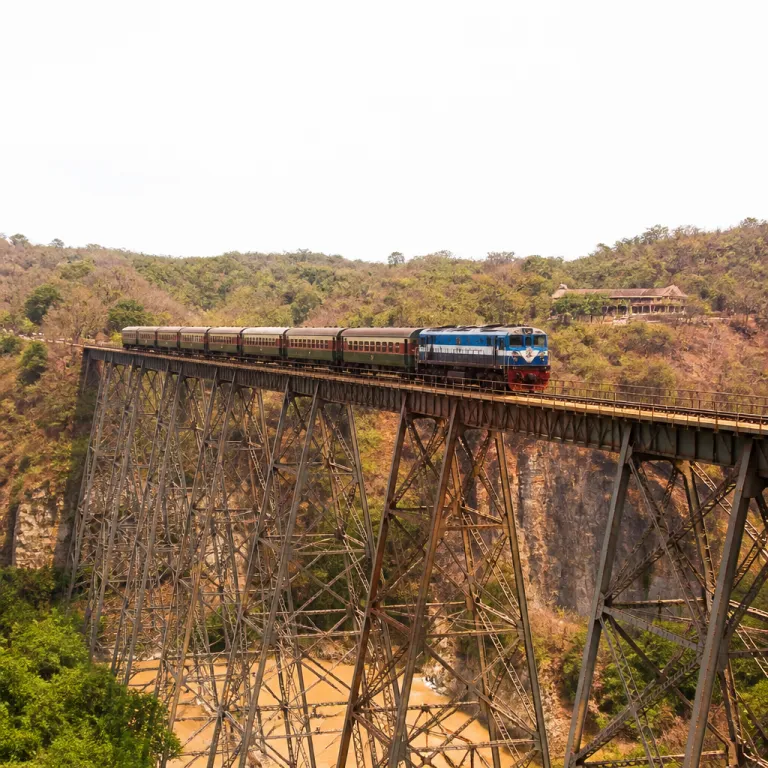
Why the Gokteik viaduct train in Myanmar belongs on your itinerary
The gokteik viaduct train Myanmar experience is not about speed. This is a slow, hypnotic train journey through Shan State, where the carriages rattle past teak forests, tea shops and small pagodas before edging onto the legendary goteik viaduct. As the train ride pauses on the steel railway trestle, you feel suspended between sky and jungle, with the bridge Myanmar landscape dropping away beneath the open windows.
For luxury travelers used to polished cabins, this railway bridge feels almost shockingly raw. The gokteik bridge is an old colonial era structure, a piece of Burma Myanmar history that still carries a daily train between Mandalay and Lashio, and vice versa along the same line. You ride not for an upper class sleeper or fine dining car, but for the rare sensation of time stretching as the train stops at tiny platforms where local vendors pass tea, samosas and fruit through the windows.
Most travelers approach the gokteik viaduct from Mandalay, pairing the rail segment with a night in the former hill station of Pyin Oo Lwin. This allows you to start the train journey in the cool early light, when the Shan State hills glow and the viaduct train crawls over the gorge in soft mist. It also means you can return by car, or travel vice versa from Hsipaw toward Pyin Lwin, designing journeys that balance comfort with the thrill of an exposed railway bridge in remote Burma.
The route: Mandalay, Pyin Oo Lwin and Hsipaw in slow motion
The most cinematic section of the gokteik viaduct train Myanmar route lies between Pyin Oo Lwin and Hsipaw. From Mandalay, many travelers book a private car to Pyin Lwin, stay in a heritage hill station hotel, then board the morning train for the ride across the goteik viaduct toward Hsipaw. This combination keeps the long Yangon Mandalay and Mandalay Lashio rail stretches to a minimum, while preserving the most beautiful part of the railway journey for daylight hours.
Leaving Pyin Lwin, the train curves through pine groves and vegetable terraces, a reminder that Shan State has long been a cool season retreat within Myanmar. The train stops at small local stations where vendors sell coffee in enamel cups, and the slow time between halts becomes part of the pleasure. From Hsipaw, many travelers continue their Myanmar tours by road deeper into Shan hills, or return vice versa toward Mandalay with a driver waiting at the station.
For those building a broader itinerary, this rail segment pairs elegantly with serene lake retreats in Shan State. After the intensity of the gokteik bridge crossing, a few nights at one of the hidden luxury hotels on Inle Lake offer a softer side of Myanmar travel. Linking Mandalay, Pyin Oo Lwin, the goteik viaduct and Inle in one arc gives you a sense of Burma Myanmar’s varied landscapes, from dry zone plains to misty hills and glassy water.
On board: classes, comfort and what luxury really means here
Expect the gokteik viaduct train Myanmar experience to be atmospheric rather than plush. The railway carriages are basic, with an upper class section that offers padded seats and slightly cleaner windows, and a standard class where wooden benches and open windows bring you closer to the local rhythm. For most luxury travelers, upper class on this train journey strikes the right balance between comfort and authenticity, especially on the Mandalay Lashio line where ride times can feel long.
There is no dedicated luxury train on this route, no hushed lounge car with crystal glasses or elaborate tasting menus. Instead, the railway bridge segment over the goteik viaduct delivers its own kind of refinement, with cool air rushing through the carriage and the slow clatter of wheels on steel echoing across the gorge. You share the train ride with families, monks and traders, and the conversations, snacks and smiles become as memorable as the highest bridge views.
For travelers used to five star stays, it helps to reframe what luxury means in this corner of Myanmar. Here, luxury is the freedom to choose your segment, to have a private car meet you at Hsipaw or Pyin Lwin, and to check into one of the carefully curated high end hotels in Myanmar at each end of the line. The gokteik bridge may not offer polished service on board, but paired with the right properties in Mandalay and Shan State, the overall journeys feel considered, coherent and deeply rewarding.
Designing a cinematic itinerary around the Gokteik gorge
Thoughtful planning turns the gokteik viaduct train Myanmar ride into the centerpiece of a slow travel itinerary. Many independent travelers begin in Yangon, then take a short flight to Mandalay rather than the long Yangon Mandalay rail journey, saving their appetite for the more scenic railway bridge section in Shan State. From Mandalay, a private car to Pyin Oo Lwin allows for flexible train stops en route, including coffee at colonial era rest houses and short walks through pine scented lanes.
After crossing the goteik viaduct toward Hsipaw, you can stay in a simple riverside lodge, using the town as a base for walks through nearby villages and tea plantations. This is where the contrast between your carefully chosen hotels and the rugged train ride becomes part of the narrative, with each night’s comfort framing the rawness of the day’s journey. From Hsipaw, some travelers continue by road toward Lashio, while others return vice versa over the gokteik bridge, experiencing the railway trestle from the opposite direction and at a different time of day.
To extend the arc, consider looping back toward central Myanmar for temple focused stays. A flight from Mandalay to Bagan connects the rail drama of Shan State with the luminous plains of pagodas, where you can base yourself near the Ananda Temple area for refined luxury hotels. Linking Bagan, Mandalay, Pyin Lwin and the gokteik viaduct in one itinerary gives you a cross section of Burma Myanmar that feels both coherent and quietly epic.
Safety, context and responsible travel around the Gokteik line
Any journey on the gokteik viaduct train Myanmar route unfolds within the complex reality of modern Myanmar. The country, still often called Burma, has experienced political upheaval and the presence of a junta, and conditions can change along the Mandalay Lashio corridor. Responsible travelers monitor current advice from trusted Myanmar tours specialists and international organizations before committing to a train journey through Shan State.
The railway bridge itself has survived decades of weather and conflict, though sections of track elsewhere in Burma Myanmar have at times been damaged or destroyed. When you ride across the goteik viaduct, you are crossing one of Myanmar tallest and most storied pieces of infrastructure, a highest bridge in the national imagination even when other structures may rival its height. Train stops and schedules can shift with little notice, so building flexibility into your journeys, and having a private car on standby in Pyin Lwin or Hsipaw, is a wise form of quiet luxury.
Travelers who choose this viaduct train segment often do so precisely because it is not polished or predictable. The train ride offers a rare window into local life in Shan State, from vendors boarding with baskets to children waving from fields as the railway trestle comes into view. By pairing the gokteik bridge experience with considered hotel choices and a realistic understanding of Burma Myanmar’s context, you honor both the romance of the ride and the realities of the country you are crossing.
FAQ about the Gokteik viaduct train in Myanmar
Is the Gokteik viaduct train journey safe for travelers?
Safety on the gokteik viaduct train Myanmar route depends on both railway conditions and the broader situation in Myanmar. The bridge itself has operated for decades, but the political context, including the presence of a junta, can affect certain areas of Shan State. Before planning your train journey, check current guidance from reputable Myanmar tours operators and international travel advisories, and consider using a trusted local driver to meet you at either Pyin Oo Lwin or Hsipaw.
Which section of the line offers the best views of the Gokteik gorge ?
The most dramatic views of the goteik viaduct and surrounding gorge lie between Pyin Lwin and Hsipaw. Many travelers choose to ride the train in one direction only, usually from Pyin Oo Lwin toward Hsipaw, then continue vice versa by road to avoid repeating the full Mandalay Lashio line. Sitting on the right hand side when leaving Pyin Lwin generally offers better views of the railway bridge and the forested valley below.
What class should I book on the Gokteik viaduct train ?
On this route, upper class is usually the best option for comfort without losing the local atmosphere. Seats in upper class carriages are padded, windows are slightly cleaner and the ride feels less crowded than in standard class, while still allowing you to interact with local passengers. There is no luxury train car on this line, so think of upper class as a modest upgrade that makes the time on board more pleasant.
How long does the scenic section over the Gokteik bridge take ?
The actual crossing of the gokteik bridge and its railway trestle takes only several minutes, but the wider scenic section lasts much longer. Expect at least one to two hours of striking views as the train approaches the gorge, slows over the goteik viaduct and then climbs back into the hills of Shan State. Because train stops and timings can vary, plan your day with generous margins and avoid tight onward connections.
How can I combine the Gokteik viaduct with luxury hotels in Myanmar ?
The most comfortable approach is to use the gokteik viaduct train Myanmar segment as a daytime highlight between two well chosen hotel stays. Many travelers base themselves in Mandalay before the ride, then overnight in Pyin Oo Lwin or Hsipaw, using private cars to connect the railway bridge section with airports or other hubs. From there, you can extend your journeys to Bagan or Inle Lake, where high end properties provide a refined counterpoint to the raw, cinematic character of the viaduct train experience.
References
For up to date practical information and context, consult sources such as Lonely Planet, the UK Foreign, Commonwealth & Development Office travel advice and the official Myanmar railways information channels.