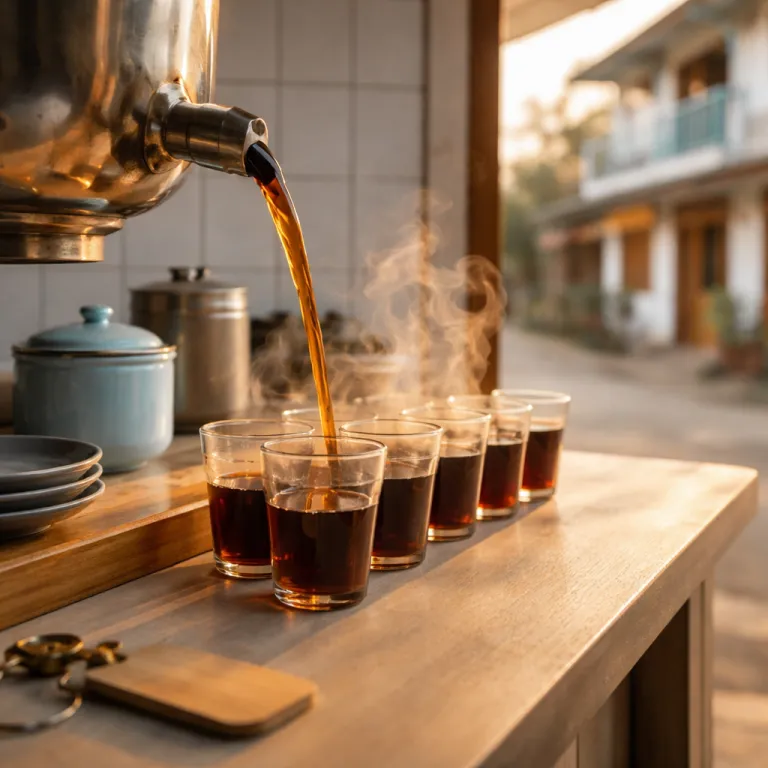
Rethinking the myanmar food guide for luxury travelers
Most luxury guides to Myanmar food still stop at city borders. They promise the best Burmese cuisine in Yangon or Mandalay, yet flatten the food story into a single, interchangeable narrative over a few days. For a traveler choosing a premium suite, that lack of township detail quietly erodes trust.
A serious Myanmar food guide for high end travel must work at street and ward level, because tea shop culture and street food habits change every few hundred metres. When you book a river facing room or a high floor suite, you are not just buying a view; you are buying a specific map of noodle soup stalls, grilled fish vendors and tea time rituals that shape your entire time in the city. The more precisely a hotel can articulate that map, the more confidently an executive guest will extend a business stay into leisure days.
Think of Burmese cuisine as a network of micro terroirs rather than a single national dish. Rice noodles in one township are cut thicker, the fish sauce is sharper, the cloves of garlic are toasted darker, and the garlic–ginger paste is handled with more restraint than in the next ward. A credible Myanmar food guide must therefore speak about food in Myanmar at the scale where a single tea leaf salad stall can justify crossing town, and where a five minute walk from a lobby can change the entire flavour profile of breakfast.
From generic lists to township led narratives
City level lists of the best Burmese food usually read like the same template. They mention one famous fish curry, a token salad, some fried snacks and a safe hotel restaurant, then move on to the next destination. That approach ignores how tea leaves are brewed, chewed and debated differently from township to township, and how those differences play out at specific corners and times of day.
For a luxury and premium hotel booking website, the editorial lens must shift from “where to eat in Yangon” to “how Sanchaung at tea time tastes nothing like Bahan at dawn”. When a concierge recommends a dosa stall or a rice flour pancake vendor, the value lies in explaining why this particular street corner, at this specific time, captures the township’s rhythm. Without that context, even the most carefully curated Myanmar food guide becomes another generic listicle that a guest could have assembled from a quick search.
Guests who pay for suites and private transfers are not asking for more options; they are asking for fewer, better argued choices. They want to know which grilled fish stand pairs best with a late check in, which noodle soup shop opens early enough after a sunrise cruise, and which Burmese salad stall is safe yet still plugged into local gossip. Township level specificity turns food in Myanmar from background texture into the main reason to stay an extra night, and gives a hotel concrete talking points instead of vague promises.
Sanchaung, Pyin Oo Lwin, Nyaungshwe: three townships, three tea shop worlds
Sanchaung in Yangon is where many business leisure travelers first feel how granular Burmese cuisine can be. Step out from a luxury hotel near Bagaya Street or around Hledan junction and you move through layers of street food, from deep fried snacks to rice noodles in peppery broth, each stall serving a different micro audience. Ask three tea shop owners on Bagaya Road about the best Myanmar curry and you will hear three fiercely local answers, each tied to a specific block and preferred time of day.
Here, a serious Myanmar food guide should map tea time as carefully as it maps temples. One corner at Bagaya Road and Kyun Taw Street specialises in laphet thoke with extra garlic–ginger from 3–6 p.m., another near Hledan junction focuses on dosa style rice flour crepes for early breakfasts, a third closer to Hanthawaddy Road is known for grilled fish brushed with fish sauce and lime after 8 p.m., all within a ten minute walk of premium rooms. As one Yangon concierge at a Sanchaung boutique hotel told us in a 2023 interview, “Our guests remember the tea shop on Bagaya Road more clearly than the lobby design.”
Pyin Oo Lwin, by contrast, filters Burmese food through its hill station climate and colonial era layout. Tea leaves are brewed stronger to cut through the cool air, noodle soup portions are larger, and fish curry often gives way to meat heavy dishes that suit misty evenings. A refined Myanmar food guide must explain why a guest might choose rice based dishes at lunch on Circular Road, then switch to fried noodles and hearty curry at night along Mandalay–Lashio Road, using the same township streets as a changing stage and noting typical opening hours, such as 6–9 a.m. for breakfast stalls and 5–10 p.m. for grills.
Nyaungshwe and the lake driven table
Nyaungshwe, gateway to Inle Lake, offers a third, water focused reading of food in Myanmar. Here, grilled fish from the lake, tea leaf salad with lake grown herbs and rice noodles shaped by Shan techniques dominate both street stalls and hotel menus. The township’s tea shops double as informal cruise planning hubs, where boatmen, local customers and tourists trade information over cups of strong tea, especially along Yone Gyi Street between 7–10 a.m. and again at dusk.
Luxury properties around Inle increasingly understand that their gastronomic identity depends on this township level ecosystem. Wa Ale Resort, for example, has become a reference point for cooking classes that use homegrown herbs and organic ingredients, and its approach to Burmese cuisine is explored in depth in our feature on Wa Ale’s cooking classes and herb driven menus. As one Inle based chef noted in a 2022 field interview, “If our kitchen cannot explain which village grew the tomatoes in today’s mohinga, we have not done our job.”
Across these three townships, the same words — curry, salad, fried snacks, noodle soup — mean radically different things. A guest who spends several days moving between Yangon, Pyin Oo Lwin and Nyaungshwe will taste how Burmese salads shift from lime bright in the city to herb dense by the lake, and how cloves of garlic and fish sauce are handled with different levels of intensity. Any Myanmar food guide that ignores these township contrasts fails the traveler who is paying for nuance, and misses the chance to turn a simple tea shop stop into a defining memory.
How room selection shapes access to township food
Where you sleep in Myanmar quietly dictates which food you will remember. A riverfront suite near a jetty leads naturally to early morning grilled fish breakfasts before a cruise, while a high floor room in central Yangon pulls you toward late night street food and tea shops. For a luxury booking platform, connecting room categories to specific Burmese cuisine experiences is no longer optional.
Consider two executives staying in Yangon for the same number of days. One chooses a business oriented tower near the CBD, the other books a smaller luxury property edging Sanchaung’s residential streets, and both ask for the best Myanmar food within walking distance. The first will likely be guided to polished hotel restaurants and a few safe curry houses, while the second can be walked, step by step, through a sequence of rice noodle stalls, dosa counters and tea leaf salad shops that feel intensely local and are reachable in under ten minutes on foot.
This is where a refined Myanmar food guide must work hand in hand with concierge teams. Instead of listing generic “street food nearby”, the guide should specify that from a particular corner suite you can reach a trusted deep fried snack vendor in three minutes, a family run fish curry shop in seven, and a tea time institution that serves Burmese salads with extra garlic–ginger in ten. The same city, the same cuisine, but a completely different dish sequence shaped by room positioning, time of day and the guest’s appetite for exploration.
What to ask the concierge instead of “where is the best burmese food”
High value guests rarely benefit from the standard question about the best Burmese food. A better opening is to ask which tea shop the concierge uses for their own tea time, which noodle soup stall they trust with hygiene, and which rice flour snacks they would serve visiting family. Those questions unlock township specific recommendations that no generic Myanmar food guide can replicate and that can be plotted as a simple walking route on a printed or digital map.
On mymyanmarstay.com, we push hotels to describe their surroundings in terms of food routes rather than landmarks. A listing might explain that from a lake view villa you can follow a five stop path of grilled fish, fish curry, leaf salad and rice based desserts, all within a short walk or boat hop. Another might highlight proximity to a cluster of tea shops where tea leaves are fermented on site, and where cloves of garlic and fish sauce are handled with a finesse that suits cautious international palates and documented hygiene checks.
For travelers who care about breakfast, this township lens becomes even more valuable. Our guide to premium hotels in Myanmar with exceptional breakfast programs shows how properties that integrate local street food, rice noodles and Burmese salads into their morning service create a more coherent sense of place. When room selection, breakfast design and nearby tea shop culture align, the entire time spent in Myanmar feels curated rather than improvised, and guests can follow clear, time stamped suggestions rather than vague tips.
Editorial standards and the business case for specificity
If a Myanmar food guide wants to be taken seriously, it needs a sharper editorial code. First, every recommendation must be anchored to a specific street, township and time of day, because tea shop culture and street food patterns change hourly. Second, guides must state clearly whether a dish is shaped by Burmese cuisine, Shan techniques, coastal fish traditions or migrant dosa culture, rather than hiding behind vague fusion language that obscures origin.
Third, hygiene and sourcing standards must be described with the same precision as flavor. Luxury travelers will happily eat deep fried snacks from a stall if they know how often the oil is changed, where the fish is sourced and how the rice flour is milled, and they will pay more for hotels that can answer those questions confidently. Field research, customer interviews and regular updates — the same methods used in serious tea shop mapping projects — should be non negotiable for any guide that claims authority, and should be summarised in short, verifiable hygiene notes.
The commercial upside is clear for a platform like mymyanmarstay.com. Travelers extending business trips into leisure days are willing to pay a premium for hotels that offer township level food intelligence, from the safest noodle soup at midnight to the most characterful tea leaf salad at dawn. When a property can show that its concierge team tracks which tea shops rise or fall in popularity — because quality, ambiance and unique offerings shift over time — it signals a level of care that justifies higher rates and strengthens repeat booking behaviour.
From tea shop directories to luxury decision tools
Tea shop directories in other countries have shown how powerful granular mapping can be. Interactive maps that log not just addresses but brewing styles, snack types and peak hours turn casual browsers into committed planners, and the same logic applies to a Myanmar food guide aimed at luxury guests. When township level data is refreshed regularly, it keeps recommendations aligned with real life shifts in Burmese food culture and avoids sending guests to closed or declining venues.
For mymyanmarstay.com, the next step is to treat tea shops, grilled fish stands and rice noodle stalls as core hospitality infrastructure rather than peripheral attractions. A hotel near a cluster of respected tea houses, where tea leaves are handled with care and garlic–ginger balances rather than overwhelms, should be positioned differently from one surrounded only by generic cafés. Over time, that level of specificity will separate serious luxury booking platforms from those still trading in broad, city level clichés about food in Myanmar and will make township maps as essential as room photos.
In the end, township level tea shop and street food intelligence is not a niche obsession. It is the difference between a guest who remembers only hotel dining rooms and one who can name the exact corner where they first tasted a perfect fish curry with rice, under a flickering street light, after a long day of travel. That memory, more than any spa treatment, is what brings discerning travelers back to Myanmar and shapes how they talk about Burmese cuisine long after they return home.
Key figures shaping township level tea and food guides
- Local tourism offices in Yangon and Mandalay report thousands of licensed tea and snack shops across major urban areas, a reminder that even within Myanmar, tea culture fragments into countless neighborhood expressions that any serious guide must track (municipal licensing data, latest available figures; for example, Yangon City Development Committee tallied more than 2,500 licensed tea shops in core townships in its most recent public report).
- Ongoing tea shop mapping projects in Yangon and Inle regions rely on regular updates to reflect new openings and closures, underscoring why township level Myanmar food guides must be treated as living documents rather than static lists (field research and online survey based initiatives led by local food writers and university tourism departments, continuous timelines with quarterly revisions).
- Tea tourism has grown alongside the rise of specialty teas and interactive digital maps, showing that travelers respond strongly when guides highlight unique offerings and local ambiance rather than generic citywide recommendations (trend analyses from regional tea associations and tourism boards, including Myanmar Tourism Federation briefings on tea focused itineraries).