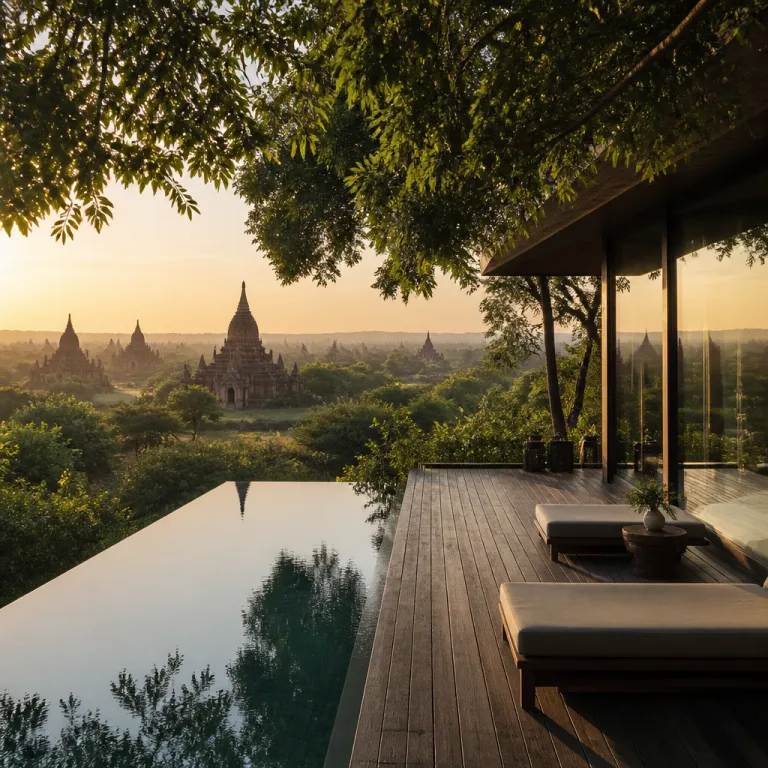
Myanmar temples and luxury stays around Bagan’s sacred plain
At dawn on the Bagan plain, mist hangs low over thousands of spires while the first bells ring from distant monasteries. Across this landscape, more than 2,300 temples and pagodas rise from the dust, creating a horizon that luxury travellers can admire from serene pools and shaded terraces. This city of temples took shape between the 9th and 13th centuries, and each visit reveals the weight of history in the warm brick, drifting incense, and echo of chanting.
For travellers booking premium hotels near Bagan Myanmar, the key is balancing comfort with proximity to the most important Buddhist temples. High end resorts cluster along the Irrawaddy River, giving guests sweeping river views while keeping the Bagan Archaeological Zone within a short drive or e-bike ride. When you plan your stay, choose properties that offer sunrise transfers to major sites such as Ananda Temple, Dhammayangyi Temple, and Shwesandaw Pagoda, because these early hours are ideal for both light and temperature.
Many luxury hotels now integrate curated temple tours into their travel concierge services. A knowledgeable guide can explain how each temple and pagoda was built, why certain Buddha images face specific directions, and how Buddhist rituals shape daily life in Bagan. Look for itineraries that include quieter shrines, where fewer people gather and you can appreciate frescoes, stucco work, and the fusion of Indian and Mon styles without crowds.
Staying in style near Ananda Temple and the Irrawaddy River
Among all temples in Myanmar, Ananda Temple stands out for its symmetry and luminous interior. King Kyansittha commissioned the Ananda Temple in 1105 AD, and its four standing Buddha statues remain some of the most revered images in Bagan Myanmar. When visiting this temple, staying in a luxury property along the Irrawaddy River allows you to combine spiritual exploration with refined relaxation.
Several premium hotels, such as Aureum Palace Hotel & Resort Bagan or the Bagan Lodge, position their suites to frame sunrise views over the river and distant pagodas Myanmar. From an infinity pool or private balcony, you can watch hot air balloons drift above the temple plain while planning which monument to visit later that day. At some riverfront retreats, concierges arrange private boat rides at dusk, followed by candlelit dinners that echo the soft glow of the pagodas on the horizon.
For travellers combining Bagan with other iconic destinations, pairing riverfront stays here with lakeside elegance at Inle Lake creates a sophisticated itinerary across Myanmar. An elegant guide to lakeside luxury and cultural depth at Inle Lake helps you understand how different regions express Buddhist culture through architecture, crafts, and food. By the time you return to Bagan for a final visit to Ananda and nearby pagodas, you will see each temple and each Buddha image as part of a wider cultural tapestry across Southeast Asia.
Luxury access to Mandalay’s sacred pagodas and royal history
While Bagan temples dominate many itineraries, Mandalay offers a different perspective on Myanmar temples and royal heritage. This city was built as a royal capital, and its Buddhist temples and pagodas cluster around palace remains, busy streets, and artisan quarters. For travellers booking premium hotels, Mandalay combines urban energy with access to some of the country’s most important shrines.
The Mahamuni Pagoda is the spiritual heart of the city, housing a revered Buddha image that people cover daily with gold leaf. Nearby, luxury hotels such as Hilton Mandalay and Mercure Mandalay Hill Resort provide calm courtyards, refined spas, and rooftop pools where guests can reflect on the intense devotion they witness at this temple. When planning your visit, schedule early morning or late evening at Mahamuni Pagoda, then retreat to your hotel for quiet dining and river views.
Travellers interested in contemporary political symbolism often add Nay Pyi Taw to their travel route between Mandalay and Yangon. An in depth look at the gold ceilinged curiosity that divides luxury travellers in Nay Pyi Taw shows how modern state power contrasts with the older Buddhist temples of Mandalay and Bagan. Experiencing both the Mahamuni Pagoda and a grand government era hotel in one trip highlights how Myanmar’s history is still being built, layer by layer.
Yangon’s Shwedagon Pagoda and urban luxury for temple focused stays
Yangon, the largest city in Myanmar, offers the most sophisticated range of luxury hotels for travellers focused on Myanmar temples. At its heart stands the Shwedagon Pagoda, rising about 99 metres above the city and dominating the skyline with its gold stupa. It is Myanmar's most sacred Buddhist site, enshrining relics of four Buddhas.
Premium hotels in Yangon, including The Strand Yangon and Pan Pacific Yangon, often design their upper floor suites and rooftop bars to frame views of Shwedagon Pagoda. From these vantage points, people can watch the temple shift from bright midday gold to a softer glow at dusk, then to a luminous beacon at night. Planning your visit around these changing lights allows you to experience the pagoda’s atmosphere several times in one day, each moment revealing a different side of Yangon’s spiritual life.
Many high end properties in the city offer private guided visits to Shwedagon and nearby Buddhist temples, including lesser known shrines where local history unfolds away from the main crowds. These curated experiences often include explanations of how each temple was built, why certain pagodas Myanmar hold specific relics, and how Buddhist rituals shape the rhythm of urban life. After visiting, returning to a calm lobby scented with local flowers and a room overlooking the city creates a satisfying contrast between sacred spaces and contemporary comfort.
Curated temple circuits: from Bagan temples to Mount Popa retreats
For travellers who want depth rather than speed, curated temple circuits across Myanmar work especially well when anchored by luxury and premium hotels. Starting in Bagan, you can spend several days exploring major sites such as Ananda Temple, Dhammayangyi Temple, Shwezigon Pagoda, and Shwesandaw Pagoda, each monument offering a different angle on Buddhist art and royal ambition. From there, a private transfer to Mount Popa adds a dramatic volcanic outcrop crowned with monasteries and pagodas to your journey.
Mount Popa lies about 50 kilometres from Bagan Myanmar, and many high end hotels arrange day trips or overnight stays that combine spiritual visits with wellness experiences. After climbing the steps lined with monkeys and shrines, guests often appreciate returning to a poolside lounger or spa treatment back near the Irrawaddy River. This rhythm of visiting intense sacred sites, then resting in refined surroundings, helps people absorb the history and symbolism of temples Myanmar without feeling overwhelmed.
Thoughtful itineraries also weave in quieter pagodas scattered beyond the main tourist routes. Some luxury travel planners collaborate with local historians and monastic communities, echoing the traditional partnership between royal patronage and religious institutions that originally built many of these sites. When your hotel concierge speaks knowledgeably about lesser known temple complexes in Bagan or small Buddhist shrines near Mount Popa, you gain access to experiences that feel both exclusive and respectful.
Respectful luxury: etiquette, timing, and the human project of preservation
Staying in premium hotels near Myanmar temples brings responsibility as well as comfort. These sacred spaces were built for worship, reflection, and community, and people visiting from abroad are guests in a living religious landscape. Dress modestly when visiting temples, remove shoes before entering any temple or pagoda, and follow local guidance from monks or caretakers at all times.
Choosing the right time to visit each site also shows respect and enhances your experience. Early mornings and late afternoons are usually the best, both for softer light on the brickwork of Bagan temples and for cooler temperatures on the steps of Shwedagon Pagoda or Mount Popa. Many luxury hotels now provide detailed timing advice, suggesting when to visit specific Buddhist temples to avoid crowds and to witness rituals such as chanting or offering ceremonies.
Across Myanmar, a broad human project of preservation is underway, involving local artisans, monastic communities, and international partners who work to stabilise structures and restore frescoes. UNESCO’s 2019 inscription of Bagan as a World Heritage Site, for example, has supported coordinated conservation with Myanmar’s Ministry of Religious Affairs and Culture. When you book with high end properties that support these efforts, your travel spending contributes directly to the long term survival of temples and pagodas that define the country’s identity. Asking your hotel about their conservation partnerships, whether in Bagan, Mandalay, or Yangon, is a simple step that aligns luxury travel with cultural stewardship.
Beyond the classics: remote luxury near Myanmar’s lesser known sacred sites
Once travellers have experienced the best known Myanmar temples, many look for quieter destinations that still offer premium comfort. Remote regions with important Buddhist temples or hilltop pagodas now host a small but growing collection of luxury lodges and refined guesthouses. These properties often emphasise landscape, silence, and close contact with local communities rather than grand lobbies or vast room counts.
One compelling direction for such travel leads toward highland regions where animist traditions blend with Buddhist practice, creating unique festivals and shrine complexes. An article on Myanmar’s most remote luxury possibility in the Chin Hills illustrates how carefully designed properties can open access to sacred landscapes while protecting fragile cultures. When combined with stays near Bagan temples or the Shwedagon Pagoda, these remote experiences deepen your understanding of how faith and geography intertwine across Southeast Asia.
As you plan, think of your journey as a sequence of carefully chosen temple and pagoda encounters, each framed by a hotel that matches the mood of the site. A riverside suite near the Irrawaddy River suits long days among the ruins of Bagan, while a polished urban tower fits evenings after visiting Mahamuni Pagoda in Mandalay. By aligning place, property, and purpose, you turn a simple list of Buddhist temples into a coherent narrative that honours both the people who built them and your own reasons for travel.
Key statistics on Myanmar temples and sacred sites
- Approximately 2,300 temples remain in the Bagan Archaeological Zone, according to UNESCO and Myanmar’s Ministry of Religious Affairs and Culture, representing one of the densest concentrations of Buddhist temples anywhere in Southeast Asia.
- The Shwedagon Pagoda in Yangon rises to about 99 metres in height, based on data cited by the Myanmar Tourism Federation, making it the dominant landmark in the city’s skyline and a key reference point for luxury hotel orientation.
- The main temple building period in Bagan stretched from the 9th to the 13th centuries, a medieval era during which royal patrons and monastic communities built thousands of temples and pagodas that now anchor Myanmar’s cultural tourism.
- Bagan lies at approximately 21.17 degrees north and 94.86 degrees east, positioning the city along the Irrawaddy River in central Myanmar and making it easily linked by air to Yangon and Mandalay for multi stop luxury itineraries.
FAQ about Myanmar temples and luxury stays
What is the significance of the Shwedagon Pagoda for travellers?
The Shwedagon Pagoda is considered the most sacred Buddhist site in Myanmar, and it shapes many luxury itineraries in Yangon. Its central stupa, covered in gold and crowned with precious stones, enshrines relics of four Buddhas, drawing pilgrims and visitors from across Southeast Asia. High end hotels often organise guided visits timed for sunrise or sunset, when the atmosphere is especially powerful.
How many temples can I visit in Bagan, and how should I plan my time?
There are about 2,300 remaining temples and pagodas in the Bagan Archaeological Zone, far more than most people can visit in a single trip. For a balanced stay, focus on key sites such as Ananda Temple, Dhammayangyi Temple, Shwezigon Pagoda, and Shwesandaw Pagoda, then add a few quieter monuments recommended by your hotel concierge. Allow at least two or three full days so you can spread your visit across sunrise, daytime, and sunset experiences.
Who built Ananda Temple, and why is it important for luxury travellers?
Ananda Temple was commissioned by King Kyansittha, and it is one of the best preserved and most beautiful temples Myanmar offers. Its symmetrical layout, glazed tiles, and towering Buddha images make it a highlight of any Bagan Myanmar itinerary. Many premium hotels arrange private guided tours there, often combined with sunset drinks overlooking the Irrawaddy River.
Are there etiquette rules I should follow when visiting Buddhist temples in Myanmar?
Yes, respectful behaviour is essential when visiting any temple or pagoda in Myanmar. Dress modestly with shoulders and knees covered, remove shoes and socks before entering temple interiors, and avoid loud conversation or intrusive photography around people who are praying. Luxury hotels usually brief guests on these customs and may provide appropriate clothing or shawls for temple visits.
How do luxury hotels in Myanmar support temple preservation and local communities?
Many high end properties near Bagan, Mandalay, and Yangon partner with local artisans, monastic communities, and conservation groups to support restoration projects. This human project of preservation can include funding structural repairs, sponsoring fresco conservation, or training guides who share accurate history with visitors. When booking, ask hotels about their specific initiatives so your travel spending contributes to the long term care of Myanmar temples and pagodas.