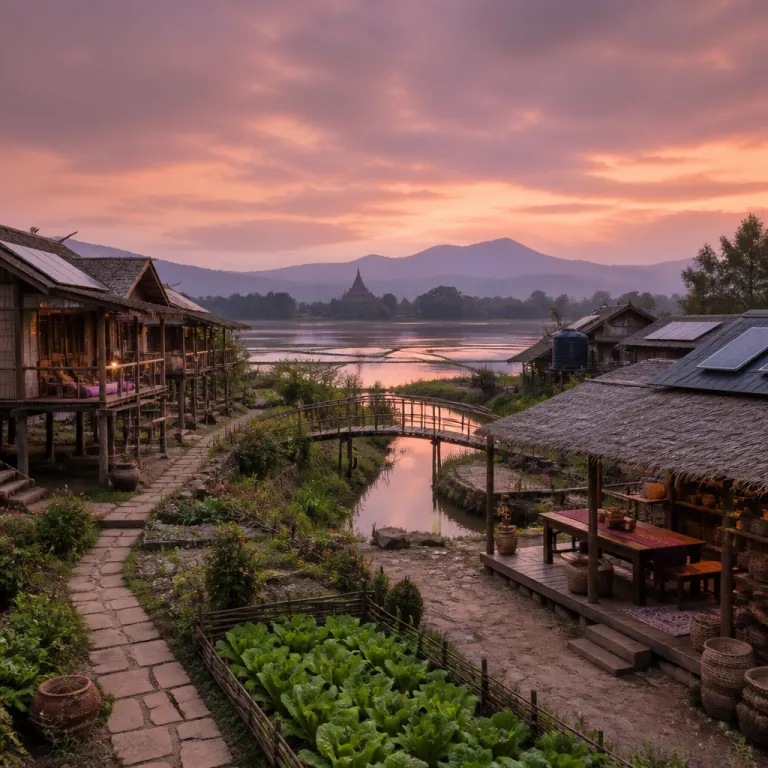
How community based tourism in Myanmar reframes luxury for families
Luxury travelers arriving in Myanmar often expect infinity pools, polished lobbies, and discreet service. In the most interesting corners of Myanmar tourism, real richness now lies in the quiet rhythm of a village morning where children learn more from a farmer than from any museum. For families using a premium hotels tourism platform, the most memorable upgrade is often a carefully curated day inside a community based experience rather than another suite category.
Community based tourism Myanmar refers to small scale, locally managed initiatives where a community designs and controls tourism activities, and where revenue flows directly into village development funds. The Ministry of Hotels and Tourism defines this form of based tourism as tourism managed by local communities to benefit their development, and that simple sentence has reshaped how the tourism sector thinks about value. For discerning visitors, this means that a stay at a high end property in the Mandalay Region or Shan State can be paired with a guided village visit where the same standards of safety, comfort, and respect apply, but the setting is a wooden house on stilts rather than a marble lobby.
In practice, tourism Myanmar projects in villages such as Indawgyi Lake, Loikaw, and Sor Long invite tourists to share meals, walk through rice fields, and learn traditional crafts with local hosts who have been trained through multi stakeholder programs. These CBT, or community based tourism, initiatives are not improvised homestays but structured products, often supported by NGOs and by Myanmar Responsible tourism specialists who provide training on human rights, financial management, and guest expectations. For families booking through mymyanmarstay.com, the role of a luxury hotel is to act as a calm base while the village becomes the real suite upgrade, with a private guide, a shaded veranda, and a front row seat to daily life.
From lakefront suites to lake villages: Inle and Shan State for premium families
On Inle Lake, the classic luxury experience has long been a teak suite facing the water, with longtail boats gliding past at sunrise. The most rewarding version of community based tourism Myanmar here now adds a carefully planned visit to Pa O or Danu villages in Shan State, where local guides lead families through terraced fields, monastery courtyards, and weaving sheds. Children step from the polished deck of a resort boat into a stilted village walkway and suddenly the geography of their travel becomes personal.
Several CBT projects in this region use tourism development as a tool for community based income, with clear rules on group size, photography, and fair payment that align with responsible tourism principles. Parents can book a morning in a village workshop, then return to a poolside lunch, knowing that their spending supports sustainable tourism rather than extractive tourism industry habits. For a detailed look at how artisan led days work for families, the guide to Inle weaving workshops for travelers with children shows how a single visit can balance comfort, learning, and respect.
In Shan State, tourism CBT programs often provide printed PDF information sheets in English that explain how revenue is shared between households, guides, and village funds, and some even offer QR code downloads for updated schedules. These CBT villages usually sit within one or two hours of major lakefront hotels, making them ideal for day trips that fit neatly into a premium itinerary without sacrificing spa time or early bedtimes for younger tourists. When families travel this way, they help prove that Myanmar tourism can be both high end and community based, with the village acting as a partner rather than a backdrop.
Bagan, Mandalay Region and the art of the curated village day
Bagan’s luxury hotels have perfected the temple view, but the most interesting days now unfold in nearby villages where lacquerware, palm sugar, and ox cart rhythms still set the pace. Community based tourism Myanmar projects around Bagan invite visitors into workshops where artisans explain each stage of lacquer production, while children try simple patterns on practice bowls. The air conditioned car and the chilled towels remain, yet the emotional highlight for many tourists is the moment a village elder quietly shares how tourism development has helped fund a new well or school roof.
In the Mandalay Region, CBT style visits often combine monastery stops, small scale weaving centers, and riverbank villages that still depend on the Irrawaddy for transport and trade. A well designed based tourism itinerary here might start from a luxury hotel breakfast, continue with a guided walk through a village market, and end with a sunset boat ride where families learn about the fragile habitat of Irrawaddy dolphins from local conservation guides. These experiences show how tourism Myanmar can support both cultural preservation and environmental protection when managed through a multi stakeholder lens.
For travelers who want a deeper dive into artisan communities, the feature on lacquerware villages near Bagan outlines how a hotel concierge can arrange a day that respects village routines while still meeting premium expectations. Many CBT villages now prepare simple printed PDF maps and information sheets that hotels can download in advance, ensuring that visitors arrive briefed on dress codes, donation practices, and basic phrases in the local language. When hotels tourism teams and village committees share this information clearly, the result is a smoother experience for tourists and a stronger sense of control for the host community.
Ethics, human rights and the new standard of responsible luxury
High end travelers are increasingly asking not only where they sleep, but how their presence affects the communities they visit. In Myanmar, the most credible community based tourism Myanmar projects now embed human rights, consent, and environmental safeguards into their operating rules. Families who care about these issues can use them as a filter when choosing both hotels and village experiences.
Myanmar Responsible tourism specialists and organizations such as the Myanmar Responsible Tourism Institute, often referred to as MRTI, have produced guidance that functions like a harm toolkit for the tourism sector. These toolkit tourism resources, sometimes shared as a white paper or as a concise PDF download, help CBT committees think through issues such as child protection, fair wages, and how to handle photography requests from visitors. When a hotel partners only with CBT villages that follow such guidance, it signals to guests that their travel choices align with sustainable tourism rather than with short term exploitation.
One widely used explanation captures the essence of this approach in a single line : “Tourism managed by local communities to benefit their development.” That sentence, often quoted in MRTI training sessions, reminds both hotels tourism managers and village leaders that community based projects must serve the host community first and tourists second. For families, this means asking practical questions before booking, such as how revenue is shared, whether a multi stakeholder committee oversees tourism cbt activities, and whether there is a clear process for feedback or complaints if something feels uncomfortable.
How luxury hotels can integrate CBT without losing their identity
Premium properties in Myanmar sometimes hesitate to engage with CBT, worried that village visits might feel rustic or inconsistent with their brand. The most successful examples show the opposite : when curated carefully, community based tourism Myanmar becomes a signature experience that deepens a hotel’s narrative rather than diluting it. The key is to treat CBT villages as respected partners, not as optional add ons.
Several leading hotels in Yangon, Bagan, and the Mandalay Region now work with MRTI and local NGOs to co design day trips that align with responsible tourism standards. They use harm toolkit style checklists to assess transport safety, guide training, and the impact of visitor numbers on village life, then integrate these visits into their concierge menus alongside more conventional excursions. Staff receive training on how to explain CBT principles to guests, including why group sizes are capped, why some activities are off limits, and how tourism development funds are managed at the community level.
For a deeper look at how on the ground nuance matters, the analysis on township level specificity and tea shop guides shows why each region and state requires its own approach. A CBT visit in Shan State, for example, might focus on farming and weaving, while a village in the Ayeyarwady Region could center on river life and the conservation of Irrawaddy dolphins. When hotels share this context clearly, guests understand that community based experiences are not interchangeable products but carefully negotiated relationships between visitors and hosts.
Planning a CBT enriched itinerary with children in Myanmar
Families booking a luxury trip to Myanmar often juggle school calendars, flight timings, and the need for downtime between temple visits. Community based tourism Myanmar can fit gracefully into this puzzle when planned as a series of half day experiences anchored by comfortable hotels. The result is a rhythm where children alternate between pool time and village time, with each setting making the other feel richer.
Start by choosing two or three regions or states where CBT is already established, such as Inle Lake in Shan State, Bagan in the Mandalay Region, or Indawgyi Lake in Kachin. From there, use your hotel or a specialist platform to identify CBT villages that welcome families, offer clear information in English, and have transparent rules about group size and activities for younger tourists. Many of these communities now provide simple downloads, such as PDF fact sheets or maps, that you can download before you travel, helping children learn a few local words or customs in advance.
During the trip, keep village visits short and focused, ideally two to four hours, with one main activity such as a cooking session, a craft workshop, or a guided walk. Encourage children to share their impressions afterward, perhaps in a travel journal or through photos taken with consent, reinforcing the idea that tourism cbt is about exchange rather than consumption. When families move through Myanmar tourism in this way, they help show that the tourism industry can be both child friendly and community based, with each village visit treated as a privilege rather than an entitlement.
Key figures shaping community based tourism in Myanmar
- There are around 20 recognized CBT sites across Myanmar, according to the Ministry of Hotels and Tourism, showing how quickly community based projects have moved from pilot ideas to a visible part of the tourism sector.
- Approximately 1 800 tourists have participated in organized CBT programs facilitated by partners such as Intrepid Travel, a modest number compared with overall tourism Myanmar arrivals but significant for small villages where each group represents meaningful income.
- These CBT initiatives have generated about 125 000 USD in direct revenue for local communities, illustrating how even limited visitor numbers can support village development funds when revenue sharing is transparent.
- Many CBT villages now limit group sizes to protect daily life, which means that premium travelers who book early often enjoy quieter, more personal experiences than they would in mass tourism settings.
FAQ: community based tourism and luxury travel in Myanmar
What is community based tourism in Myanmar ?
Community based tourism in Myanmar refers to tourism activities that are designed, managed, and owned by local communities, usually at the village level, with the explicit goal of supporting their development and preserving culture. These CBT projects often include homestays, guided walks, craft workshops, and cultural performances, but always under rules set by the host community. For luxury travelers, CBT usually takes the form of curated day visits from nearby hotels rather than overnight stays.
How does CBT benefit local communities and families who visit ?
CBT channels a significant share of visitor spending directly into village funds, household income, and training programs, which can support education, health, and infrastructure. For visiting families, the benefit lies in meaningful encounters where children and adults learn about daily life, farming, crafts, and local beliefs in a respectful way. This model contrasts with conventional tourism industry patterns where most revenue remains with external operators rather than with the community.
Where can I experience CBT while staying in luxury hotels ?
Several CBT sites sit within easy reach of premium properties, including villages around Inle Lake in Shan State, communities near Bagan’s temple plain, and projects in the Mandalay Region and at Indawgyi Lake. Many high end hotels now maintain curated lists of partner villages and can arrange private transport, trained guides, and translated briefings. Using a specialist platform focused on Myanmar tourism can help you compare options and align them with your family’s interests and children’s ages.
Is community based tourism suitable for young children ?
Most CBT villages welcome families with children, provided that visits are short, supervised, and respectful of local customs. Age appropriate activities might include simple cooking lessons, craft demonstrations, or gentle walks rather than long treks or late night events. Parents should brief children on basic etiquette, such as dress codes and when not to take photos, so that the visit feels comfortable for both hosts and visitors.
How can I check if a CBT experience is ethical and responsible ?
Look for clear information on how revenue is shared, whether a multi stakeholder committee manages tourism, and whether the project has received training from organizations such as MRTI or from Myanmar Responsible tourism programs. Ethical CBT initiatives usually provide written guidelines, sometimes as a PDF or printed leaflet, covering issues such as child protection, photography consent, and environmental care. If a hotel or operator cannot answer basic questions about these points, consider choosing a different CBT village that treats responsible tourism as a core value rather than a marketing phrase.